
Have you ever felt like you can’t stop thinking about a part of your appearance? Maybe you check it often, try to hide it, or worry about what others see. These thoughts can feel overwhelming and hard to turn off, especially when they keep coming back throughout the day.
The signs of Body Dysmorphic Disorder (BDD) are patterns where someone becomes deeply focused on a perceived flaw in their appearance. These signs often include constant thinking about how you look, comparing yourself to others, seeking reassurance, and feeling anxious or uncomfortable being seen. These patterns can feel intense and hard to control, even if others don’t notice the concern in the same way.
When people search for the signs of body dysmorphic disorder, they are often trying to understand what they’re experiencing. This article isn’t here to diagnose. Instead, it will help you recognize common body dysmorphic disorder symptoms and understand what these patterns can feel like in everyday life.
Common Signs of BDD (Body Dysmorphic Disorder)
These patterns can look different for everyone, but there are some signs and symptoms of body dysmorphic disorder that tend to show up more often in people with BDD.
1. Constant Focus on a “Flaw”
One of the most common symptoms of BDD is a strong preoccupation with one specific body part or area of physical appearance. This concern is often centered around perceived defects that others may not notice.
This might look like:
- Thinking about it throughout the day
- Feeling like it stands out more than anything else
- Believing others notice it right away
Even if others don’t see it the same way, the concern can feel very real and intense, affecting overall body image and self-esteem.
2. Mirror Checking or Avoidance
Some people check mirrors often, while others avoid them completely. These compulsive patterns are common in BDD and are often attempts to manage distress.
You might:
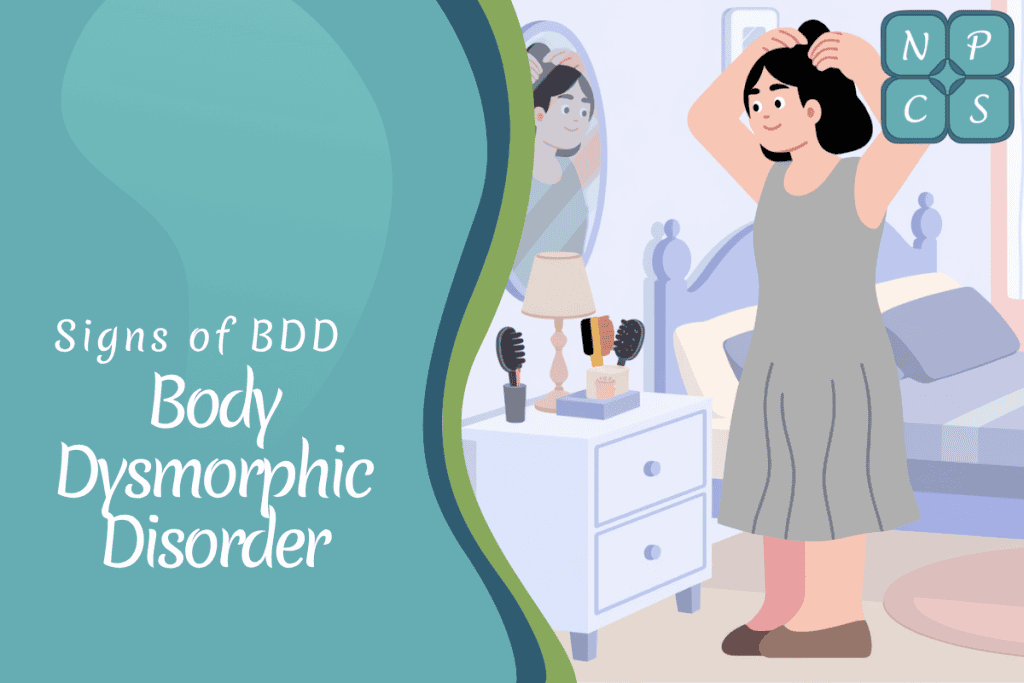
- Check your appearance many times a day
- Try to “fix” or adjust what you see
- Avoid mirrors, photos, or reflections altogether
Both patterns are common when appearance concerns feel overwhelming and difficult to control.
3. Comparing Yourself to Others
Another common sign of body dysmorphic disorder is frequent comparison. This can deeply impact low self-esteem and reinforce negative beliefs.
You may notice:
- Comparing your appearance to people in real life or online
- Feeling like you don’t measure up
- Focusing on how others look “better”
This pattern can increase anxiety and make it harder to feel comfortable in your own skin.
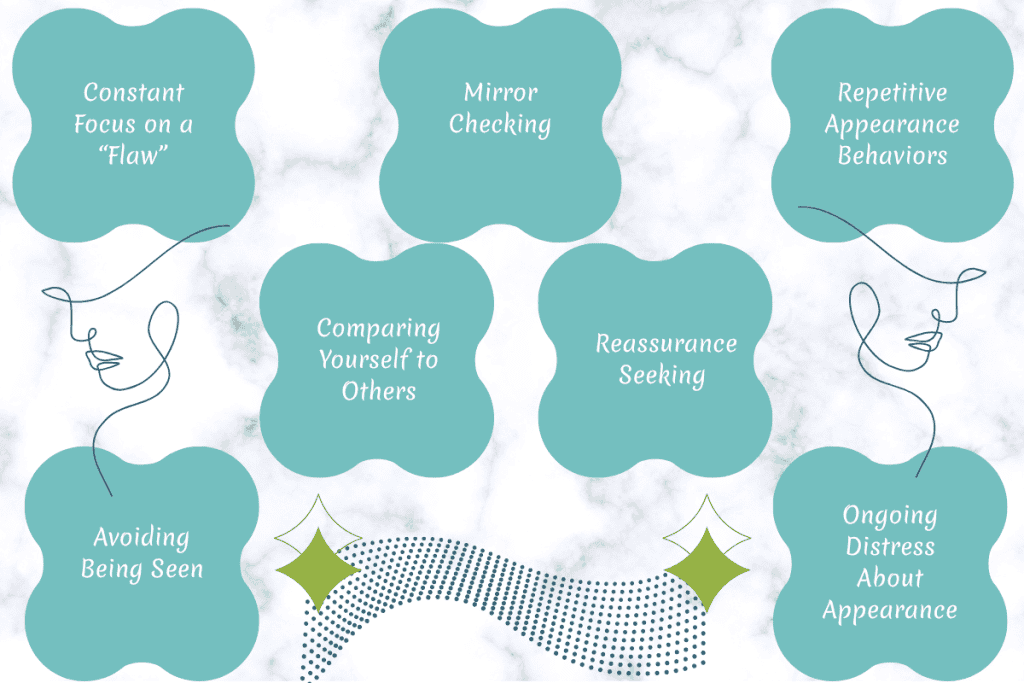
4. Seeking Reassurance (But Not Feeling Better)
It’s common for people with BDD to seek reassurance from others, hoping to feel relief.
You might ask:
- “Does this look okay?”
- “Do you notice anything wrong?”
Even when reassurance is given, it may not feel convincing or long-lasting. The worry often comes back quickly, reinforcing the cycle.
5. Avoiding Being Seen
As these thoughts grow, avoidance can increase. This is not about vanity, it is about distress linked to a mental disorder affecting how you see yourself.
You might:
- Avoid social situations
- Stay out of photos
- Feel anxious about being looked at
- Cancel plans because of how you feel about your appearance
Over time, this avoidance can begin to affect daily life and relationships.
6. Repetitive Behaviors Around Appearance
Some people develop routines or habits to manage the distress. These behaviors are often linked to attempts to “fix” perceived defects.
This might include:
- Excessive grooming or fixing
- Changing outfits multiple times
- Covering certain features
- Trying to hide or “correct” what feels wrong
In some cases, this can extend to seeking cosmetic procedures, though the relief is often temporary.
7. Feeling Anxious or Distressed About Appearance
Some people develop routines or habits to manage the distress. These behaviors are often linked to attempts to “fix” perceived defects.
This might include:
- Excessive grooming or fixing
- Changing outfits multiple times
- Covering certain features
- Trying to hide or “correct” what feels wrong
In some cases, this can extend to seeking cosmetic procedures, though the relief is often temporary.
What These Signs Can Mean
Seeing yourself in some of these patterns does not mean something is wrong with you. For many individuals with BDD, these experiences are part of a mental health condition, not a personal failure.
These body dysmorphic disorder symptoms are often part of learned patterns, ways the mind tries to protect, control, or make sense of discomfort. This may include a preoccupation with perceived flaws, ongoing thoughts about perceived flaws, or distress about perceived flaws in appearance that may not be noticeable to others. Over time, these patterns can cause significant emotional distress and begin to interfere with daily functioning, including relationships and social life.
Understanding these signs is a helpful first step. From there, it becomes easier to explore what’s underneath and what kind of support may help. Many people with BDD may benefit from working with a mental health professional, especially through approaches like cognitive behavioral therapy, which is commonly used in the treatment of body dysmorphic disorder.
If these patterns feel overwhelming or include deeper distress, including suicidal thoughts, it is important to seek help early. With the right support, healing is possible, and many people begin to rebuild their sense of peace, confidence, and ability to function in daily life.
When Do These Signs Become More Concerning?
It may be helpful to pay attention to how much these patterns are affecting your life.
These signs may need more attention if:
- The thoughts feel constant or hard to control
- A lot of time is spent focusing on appearance
- Avoidance is increasing
- Confidence and relationships are being affected
You don’t need to wait until things feel severe to take these patterns seriously.
How Support Can Help
Support is not about changing how you look.
It’s about changing how you experience yourself.
Helpful approaches often focus on:
- Reframing negative thoughts
- Reducing anxiety and overthinking
- Building self-acceptance
- Feeling more comfortable being seen
Final Thoughts
If these patterns feel familiar, it can be exhausting, but you’re not alone in experiencing this.
These thoughts and behaviors can shift over time with the right kind of support. It’s possible to feel more at ease in your own skin and more confident showing up in your life.
Small steps can make a meaningful difference.
Until next time,